

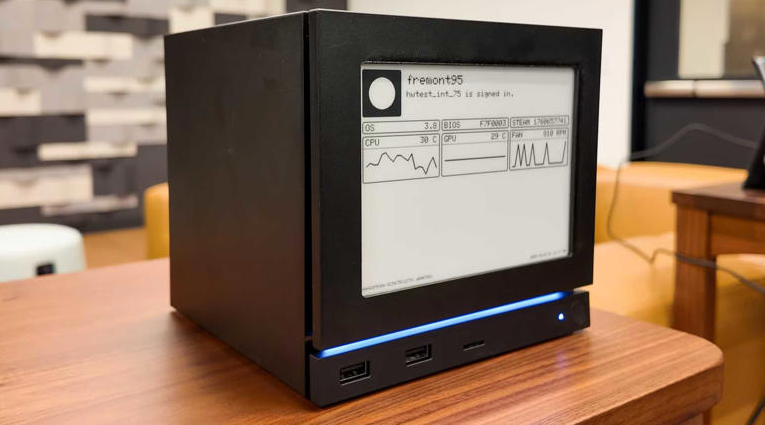
When Valve announced the next round of Steam Hardware a few months ago, much of the PC hardware world zeroed in on the Steam Machine, Valve’s second crack at putting their own spin on a home console. It had a fascinating spec list with custom AMD hardware and a target of 4K at 60 FPS, a target that the current generation of home consoles is reaching in most titles, sometimes with upscaling, something that Valve was not shy about in their initial announcement.
The temptation to compare the Steam Machine to the PS5 or Xbox Series X is quite clear, they’re all gaming “appliances” that you stick in your TV stand to play games on, but Valve isn’t really competing with either of those systems, and they know full well they’re already in a different product category—one that they’re trying to create.
How console manufacturers make money
Game sales are just as important as console sales
It’s worth understanding how console manufacturers make money in the first place. Sony, Microsoft, and Nintendo aren’t selling their hardware at the highest margins they can for how powerful it is. Instead, they squeeze these margins, especially early on, in order to grow a user base.
When a game is sold for the PS5, a percentage of that money goes to the developer and publisher, but Sony also gets a cut of that. This is what allows them to eat some of the cost of selling the hardware at a slim margin, because they know they’ll make it back down the road with game sales throughout the console’s lifecycle. Both the Xbox and Nintendo consoles work the same way, though Nintendo owns a lot of the IP that is sold on their consoles, and they’re also a bit more hesitant to mark down their hardware as heavily as their counterparts.
The thing is: Valve also takes a percentage of sales from Steam, but they’re selling what is fundamentally a computer, not a gaming console, so users are free to install whatever they please on the Steam Machine.
Valve doesn’t have to worry about that
Steam is already the default
Valve obviously lacks “exclusive” titles, but anyone who’s buying games on PC are probably buying them on Steam, and most people who buy a Steam Machine will already have a budding library. With a Steam Machine purchase, a user will have to reach for fewer excuses to buy games period. It’s already the default store for PC games with very little in the way of competition. They’ve secured their user base already, so any discounting they do on their hardware isn’t as much an attempt to capture more user base for Steam as it is for a product segment that they create, as they did with the Deck.
Having it be an “unlocked” computer is a massive benefit
Sony and Microsoft aren’t interested in that market at all
The Deck is a great example of what Valve is trying to do with the Steam Machine, and it has a great console parallel. The Steam Deck is a gaming handheld a lot like the Nintendo Switch, and while consumers do sometimes weigh buying one or the other, they’re fundamentally different products. Most people that I know that enjoy handheld gaming own both of them, and that’s because of how different they are.
Like the Deck, the Steam Machine is just a small computer, and just like how they essentially spawned the PC handheld market, Valve are trying to create the market for an off-the-shelf ITX PC for the living room, which is not the same thing as a console. Conventional gaming consoles don’t run Linux, and certainly can’t have other operating systems booted on them. Whether or not it’ll actually work is a different story, though.
It’s still underpowered
And is struggling with supply issues
Compared to the PS5 and Xbox Series X, the Steam Machine does not look like it was built to win a specs war. Its Zen 4 CPU is newer on paper compared to the Zen 2 chips in the conventional consoles, but its GPU and performance targets point to something much closer to a compact living-room gaming PC than a traditional high-end console, with both the Xbox and PlayStation featuring beefier GPUs.
It’s also not immune from supply issues, with the current AI-induced DRAM crisis hitting Valve particularly hard, as it sounds like they haven’t been able to solidify a supply of DRAM at a set price, and this is also presumably the primary reason for not having a solid release date or price for the unit.